
Table of Contents
TL;DR
Event badge printing is the process of creating personalized badges for attendees, speakers, exhibitors, staff, and VIP guests. It helps event organizers simplify check-in, improve networking, manage access, and create a professional first impression. In 2026, the ideal event badge printing system should offer on-demand printing, QR code integration, real-time registration synchronization, customizable badge templates, and reliable onsite support. Choosing the right provider helps reduce queues, minimize printing errors, and deliver a smoother event experience.
Introduction
The first few minutes of an event can shape how attendees perceive the entire experience. When guests arrive at a conference or exhibition, they expect a quick check-in process, an accurate badge, and clear directions to the venue. However, outdated printing processes, incorrect attendee details, and long registration queues can create unnecessary frustration.
This is why event badge printing has become an important part of modern event management. Instead of preparing every badge manually, organizers can use digital registration systems, QR code scanning, and on-demand printing to simplify attendee entry.
But choosing a badge printing solution involves more than selecting a printer. Organizers must consider printing speed, software integration, badge quality, security, scalability, and technical support.
In this article, we will explain what event badge printing is, why it matters, and how to choose the right event badge printing system provider in 2026.
What Is Event Badge Printing?
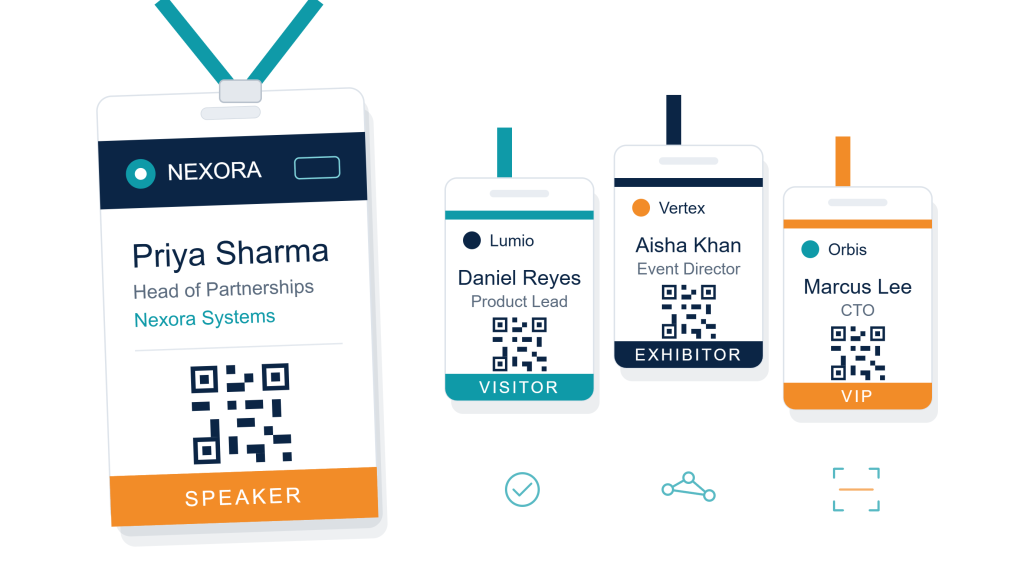
Event badge printing is the process of producing personalized identification badges for people attending an event. These badges typically display an attendee’s name, organization, job title, attendee category, and other relevant information.
Depending on the event’s requirements, badges may also include QR codes, barcodes, RFID technology, or other identifiers that support check-in, access control, and attendee engagement.
For example, at a business conference, an attendee’s badge might display their name, company, and a QR code. Event staff can scan the code to verify registration, while exhibitors can scan it using an approved lead retrieval system to exchange contact information.
How does event badge printing work?
A modern badge printing workflow generally follows these steps:
- Attendee registration: Guests register online and submit their details through an event registration platform.
- Data synchronization: The badge printing system receives attendee information from the registration database.
- Check-in verification: At the venue, attendees scan their QR codes or provide their registration details.
- Badge generation: The system retrieves the relevant attendee record and applies the appropriate badge template.
- On-demand printing: A connected printer produces the personalized badge.
- Entry and engagement: Staff can use the badge or its embedded identifier for access checks, session tracking, and networking activities where supported.
For instance, imagine organizing a three-day technology conference with 2,000 registered attendees. Instead of printing every badge in advance and arranging them alphabetically, you can connect registration software to onsite printers. When an attendee arrives, their registration is verified and their badge is printed automatically.
This approach can simplify last-minute registrations, reduce unused badges, and make check-in easier to manage.
Why Badge Printing for Events Matters
Event badges may seem like a small operational detail, but they support several important aspects of event management. From simplifying registration to improving networking and controlling access, a well-planned badge printing process can make an event more organized and professional.
Here are the key reasons why badge printing matters.
1. Speeds Up Event Check-In
Long queues at registration desks can frustrate attendees before the event even begins. Traditional processes often require staff to search attendee lists, verify registration details, locate pre-printed badges, and distribute them individually.
An automated badge printing system simplifies this process. Attendees can scan their QR codes, verify their details, and receive personalized badges within a short time. Research shows that 75% of event professionals use on-site badge printing to streamline attendee check-in, reduce registration delays, and improve the overall attendee experience.
For large conferences and exhibitions, self-service kiosks and multiple printing stations can help manage peak arrival periods more efficiently.
Additionally, Pre-printed badges typically suffer from a 20% to 30% no-rate waste factor (paying for unused cards, plastic holders, and lanyards). On-demand printing only prints badges as attendees actually check in.
2. Creates a Professional First Impression
An event’s registration area is often the first physical interaction attendees have with the organizing team. A smooth check-in experience communicates professionalism and attention to detail.
Customized badges featuring the event logo, brand colors, attendee names, and organizational details also reinforce brand identity. Organizers can include sponsor logos where appropriate, creating additional branding opportunities.
Readable, well-designed badges help attendees identify one another without repeatedly asking for names or affiliations.
3. Improves Networking Opportunities
Networking is a major reason people attend business conferences, trade shows, and industry events. However, connecting with the right people can be difficult when attendees cannot easily identify one another.
Badges displaying names, companies, job titles, or attendee categories make introductions easier. For example, an exhibitor can quickly identify a potential customer, while a conference participant can recognize a speaker or industry expert.
When integrated with compatible lead retrieval tools, QR codes or other identifiers can also help exhibitors collect contact details with appropriate consent.
4. Strengthens Access Control and Event Security
Not every attendee should necessarily have access to every area of an event. Speakers, exhibitors, VIP guests, staff members, and general attendees may have different permissions.
Badge printing systems can assign different designs, labels, or color indicators to each category. When connected to access control software, encoded identifiers can help verify whether a person is authorized to enter a particular session or restricted area.
However, a badge alone does not guarantee security. Organizers should combine it with registration verification, appropriate scanning procedures, and access permissions.
5. Reduces Manual Errors and Wasted Materials
Manually preparing and distributing badges can lead to spelling mistakes, duplicate records, misplaced badges, and incorrect attendee categories.
When badge printing is connected to registration software, attendee details can flow directly into the appropriate print template. This reduces repeated data entry and helps ensure that badges reflect the latest approved information.
On-demand printing also avoids producing a physical badge for every registrant before knowing who will attend. It can reduce unused stock, although the actual savings depend on badge materials, printer costs, and attendance patterns.
6. Provides Useful Event Data
Modern badge printing systems can become part of a broader event data workflow.
When integrated with check-in and session scanning tools, they can help organizers understand arrival patterns, attendance levels, and participation in different sessions. Exhibitors may also use compatible badge scanning tools to record leads.
For example, if a product demonstration attracts substantial attendance, organizers can compare session check-in data with feedback and other engagement measures to inform future planning.
How to Choose the Ideal Event Badge Printing System Provider in 2026
Choosing the right event badge printing provider involves more than comparing equipment and prices. The ideal provider should integrate with your registration workflow, handle attendee volumes efficiently, and deliver reliable on-site support.
1. Look for Fast, On-Demand Printing
Choose a system that prints badges immediately after check-in and supports quick reprints for walk-ins or attendee updates. Ask about self-service kiosks, staffed stations, and actual processing speeds.
2. Check Registration Software Integration
Ensure the system integrates with your existing event registration platform. Look for real-time attendee synchronization, QR code scanning, customizable badge templates, and compatibility with access control tools.
3. Evaluate Print Quality and Customization
Select a provider offering clear, durable badges with customizable layouts, sizes, and materials. Test sample prints to verify name readability, logo quality, and QR code scanning accuracy.
4. Ensure Scalability
Choose a solution that accommodates your expected attendance and peak arrival periods. Ask the provider to recommend sufficient printers, kiosks, scanners, and backup equipment for your event size.
5. Prioritize Security and Data Privacy
Verify that attendee information is securely stored, transmitted, and accessed. Look for role-based permissions, appropriate data retention policies, and secure handling of misprinted badges.
6. Compare Total Costs
Consider printer rentals, badge materials, lanyards, software subscriptions, integration fees, installation, and onsite support. Compare complete quotations rather than focusing solely on equipment prices.
7. Confirm Onsite Support
Ask whether trained technicians will be available during registration. Confirm backup arrangements for printer failures, connectivity issues, and supply shortages to minimize disruptions.
8. Review Experience and Reliability
Request case studies and references from similar events. If possible, test the complete workflow, including registration, printing, reprints, scanning, and offline procedures, before making your final decision
Conclusion
Event badge printing is more than a way to identify attendees. It supports faster check-in, better networking, improved access management, accurate attendance records, and a professional event experience.
In 2026, organizers should prioritize providers that combine on-demand printing, registration integration, customization, scalability, security, and dependable technical support.
The best solution is not necessarily the one with the most features or the lowest price. It is the one that fits your event’s size, budget, audience, and operational requirements.
By evaluating providers carefully and testing the complete workflow before event day, organizers can reduce registration friction and create a smoother experience from the moment attendees arrive.
FAQs
1. Which features should an event badge printing system include?
Essential features include registration integration, fast on-demand printing, QR code scanning, customizable templates, attendee category management, reprinting, and reliable reporting. Larger events may also need self-service kiosks, access control integration, backup equipment, and onsite technical support.
2. How many badge printers do I need for an event?
The number depends on expected attendance, peak arrival times, average check-in duration, printing speed, and the number of exceptions. Estimate demand during the busiest arrival period, test the complete workflow, and include spare capacity to handle unexpected surges or equipment failures.
3. Can event badges be used for access control?
Yes. Badges can display attendee categories or contain QR codes, barcodes, or RFID identifiers that work with compatible access control systems. However, effective access control also requires registration verification, correctly configured permissions, and appropriate scanning procedures.
4. How much does event badge printing cost?
Costs vary according to event size, badge material, printer requirements, software subscriptions, integration needs, and technical support. Request an itemized quotation that includes hardware, consumables, installation, staffing, and backup arrangements to understand the total cost.